Sustainability.
We do not treat sustainability as a marketing line. It is a consequence of doing things properly: choosing materials that age well, making them by hand in small batches, and designing every frame to be repaired rather than replaced.
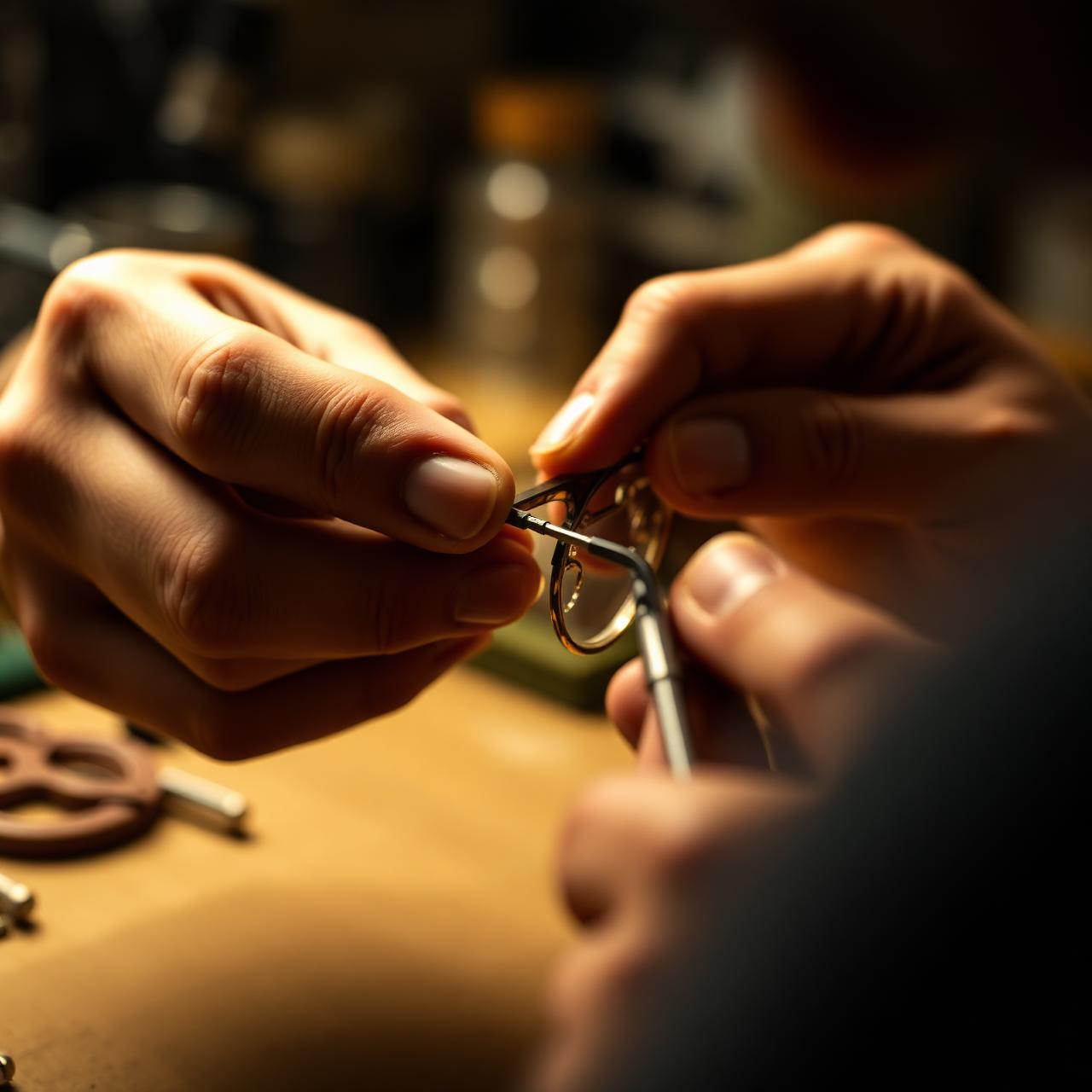
The Milan atelier — every frame is hand-finished and inspected before it leaves the bench.
Materials
Our frames are made from two materials: bio-acetate and Japanese titanium.
Bio-acetate is derived from renewable cellulose — cotton and wood pulp — rather than petroleum-based plastics. It is biodegradable under industrial composting conditions and free from the phthalates and plasticisers found in conventional acetate. The material is also hypoallergenic, which matters when something sits on your face for twelve hours a day.
Titanium is among the most abundant metals on earth, infinitely recyclable, and exceptionally light. We use grade 2 Japanese titanium for its tensile strength and corrosion resistance, which means hinges and temples hold their shape for years without fatigue.
Production
Every frame is produced in small batches at our partner atelier in northern Italy. Small batches mean less waste, sharper quality control, and the ability to refine a design between runs rather than committing thousands of units to a mould that could be improved.
The atelier runs on renewable energy and recycles acetate offcuts into future sheets. Scrap titanium is collected and returned to the foundry for re-melting. Nothing goes to landfill.
We do not subcontract to cut costs. The same team of twelve craftspeople has been cutting, tumbling, polishing, and assembling our frames since the first collection.
Packaging
Our cases are made from recycled wool-felt offcuts from the Italian textile industry. They are stiff enough to protect a frame, soft enough to slide into a pocket, and completely free of plastic.
Shipping boxes are FSC-certified kraft cardboard with water-based inks. We do not use tissue paper, plastic sleeves, or foam inserts. The box is sized to the order — no oversized parcels with air inside.
Each order includes a microfibre cloth made from recycled PET. It can be washed and reused indefinitely.
Longevity & Repairs
The most sustainable product is the one you do not throw away. We design every frame so that its parts can be replaced: hinges, nose pads, temples, and lenses. If a frame breaks, we repair it. If a hinge loosens, we tighten it. If the acetate dulls after years of wear, we polish it.
We offer free adjustments for the first two years and a lifetime repair service at cost price. Write to aftersales@stanleypaulsen.com with a photograph and we will tell you what is possible before you send anything.
End of Life
When a frame has genuinely reached the end of its life, we take it back. Return any Stanley & Paulsen frame to us — regardless of age or condition — and we will disassemble it: acetate is sent for industrial composting, titanium is returned to the foundry, and small metal fixtures are recycled.
In return, you receive a credit toward your next frame. We do not want old products in drawers. We want the materials back in circulation.
What We Are Working On
We are not perfect. Here is what we are improving:
- — Transitioning all lens production to recycled polycarbonate by 2027
- — Replacing our current recycled PET cloths with organic cotton alternatives
- — Mapping the full carbon footprint of every frame from raw material to delivery
- — Exploring sea shipping for intercontinental orders to offset air freight emissions
Last updated — June 2026